“ARAMAZD: SMART (S-strong, M-modern, A-active, R-responsible, T-transparent)”
Project Duration: 01.10.2018 – 30.09.2021
Number of Beneficiaries:
Location: Bordering communities in Gegharkounick, Lori and Shirak provinces of the Republic of Armenia
Goal:
The overall goal of “Aramazd: SMART” project is to promote the sustainable development processes in bordering settlements of the Republic of Armenia through the establishment of partnership and collaboration among key stakeholders: Local authorities, Civil Society Organizations, Small and Medium Entrepreneurs, young active citizens.
Objectives:
Handicraft workshop for women
Project Duration:01.07.2015 – 30.06.2017
Number of Beneficiaries: 50 women
Location: Gyumri (Shirak Province)
Background
During the implementation of the different projects Armenian Caritas discovered the need of vocational trainings the insure somehow the economic stability of poor and marginalize families. Started with similar pilot project which was implemented in 2005-2006 and involved a small number of women who suffered domestic violence, since 2007 the project grew into a fully operating workshop with locally recognized quality education.

Social and Economic Self-determination in Rural Areas
The contents of this web-page is the sole responsibility of “Armenian Caritas” and can in no way be taken to reflect the views of the European Union.
The European Union’s NSALA project for Armenia
This is a three year project, which will run in 2009-2012. The project is co-funded by the European Union and Caritas International in Belgium.
“German Friendship”
Start: 2003
End: Open -Ended
Background
The idea of the project has been initiated by the teachers, students and parents of Kardinal Frings Gymnasium of Bonn, Germany, in 2003. Up to now the gymnasium organizes annual fundraising activities to the benefit of children living in remote villages of Armenia, aimed at improvement of their educational conditions and solving of the primary problems of the targeted schools. The project also assists to building of community capacity by encouraging community participation in all the stages of project implementation.
Goal: Sustainable communities built through improvement of socio-economic conditions and realization of community potential
AC started its community development program intervention yet in 1998, when the Organization understood the necessity of sustainable investments not only into the improvement of infrastructures, but also in mentality change of people. Inherited from the Soviet era, the mentality of people had to shift from the demanding character of consumer to initiator and participant of change in one’s own life and community. Almost 20 years have passed since the first steps in community mobilization. AC adapted its methodology of work and utilized tools according to the demand of the times and the growth of own capacities.
{module [55]}
Financial Statement and Independent Audutor’s Report 2017 (1556 kb)
Financial Statement and Independent Audutor’s Report 2016 (870 kb)
Financial Statement and Independent Audutor’s Report 2015 (1.07 MB)
Financial Statement and Independent Audutor’s Report 2014 (192 kb)
Financial Statement and Independent Audutor’s Report 2013 (833 kb)
Financial Statements and Independent Auditor’s Report 2012 (152 kb)
Financial Statements and Independent Auditor’s Report 2011 (175 kb)
Special Purpose Financial Statements 2010 (270 kb)
Special Purpose Financial Statements 2009 (332 kb)
Special Purpose Financial Statements 2008 (332 kb)
Special Purpose Financial Statements 2007 (604 kb)
Special Purpose Financial Statements 2006 (106 kb)
Special Purpose Financial Statements 2005 (207 kb)
“Armenian Caritas” Benevolent NGO
- Mission Statement
- Vision
- Strategic Directions
- Goals and Objectives
2015-2016
Mission Statement
The Mission of the “Armenian Caritas” is “To serve different vulnerable groups with love and compassion, respecting the dignity of each individual”.
Vision
Armenian Caritas is a strong and significant role player in consolidation of social justice and social protection in the Republic of Armenia.
STRATEGIC DIRECTION 1.
“Emili Aregak” Center for Children and Youth with Multiple Disabilities
Project Duration: 01.06.2008 – 31.12.2018
Number of Beneficiaries: 60 children
Location: Shirak Province: Gyumri city
Background:
Disabled people are separated and isolated from the rest of the society because they are seen as an embarrassment or weakness for the entire family. In many cases, one family member is given for the responsibility of caring for the disable individual.
According to “Armenian Caritas” research,
History of Armenian Caritas
In May 1995, the Armenian Catholic Church,headed by Msgr. Nerses Archb. Der-Nersessian, the Gyumri-based Ordinary of Armenian Catholics in Armenia, Georgia, and Eastern Europe, founded Armenian Caritas in Gyumri, Shirak region.
In 1996, a Board of Directors, consisting of a president and six other members, was established and given the task of formulating the strategy of the organization and supervising its implementation.The organization was officially recognized by the Armenian Ministry of Justice as a local NGO in 1997. Since 1999, Armenian Caritas has become a full member of Caritas Internationalis.
Project Duration: 01.01.2002 — ongoing
Beneficiaries
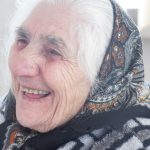
- Single elderly over 65 years of age
- Single persons with disabilities over 18 years of age
Beneficiary criteria
- Living below the poverty line
- Having multi-health problems
- Being lonely
- Being disabled
- Bad social conditions
- Bad housing conditions – temporary houses in the suburbs of the cities.
Regions
- Shirak, Gyumri
- Lori, Tashir, Vanadzor
- Gegharkunik, Gavar
- Ararat,
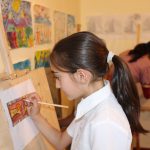
Rehabilitation and Involvment of children under precarious circumstances through Art therapy
Project Duration: 01.01.2010 – 30.11.2017
Number of Beneficiaries: 25
Location: Lori Province: Vanadzor
Goal:
Contribute to socio-psychological rehabilitation of disabled and children in various difficult situations through provision of relevant services and amelioration of conditions.
Project activities
TThe project works with around 20 children and their family members. Different therapies, such as fairy-tale therapy, art and paining therapy, activities to strengthen the memory are held with the children who are diagnosed with infantile cerebral paralysis,