In 2023, leaving everything behind like so many others, Gayane Harutyunyan was forcibly displaced from Stepanakert to Armenia along with her mother-in-law and three daughters. The one driving the family was her middle daughter, 20-year-old Anoush.
«“We fled with only the clothes on our backs, taking nothing with us-just a few pieces of warm clothing (as much as would fit in the car trunk) and our baked bread. But the terror we experienced until we reached the Armenian border is impossible to describe. My granddaughter was at the wheel. Seeing her, the Azerbaijani border guards stopped the car. Then, realizing there were no men in the vehicle—only women and girls they first tried speaking to us in their language. We made it clear that we didn’t understand. They said nothing, but I felt they were looking to find something forbidden in the car so they wouldn’t let us pass… It was terrifying; we held our breath. In the end, finding nothing prohibited or suspicious, they let us go. How we managed to reach here, only God and we know,” » recalls 72-year-old Lusya Harutyunyan, remembering with horror what could have happened if they hadn’t been allowed to move forward.
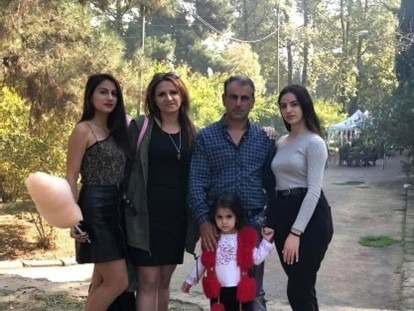
The latest family photo in Artsakh / personal archive
“I regret nothing of what we left behind in Artsakh, nothing at all… I only grieve for the graves of my husband and son, who were both killed at a young age. We couldn’t even bring a handful of soil with us. We brought them back only in our hearts and minds. Nothing else matters to me; the important thing is that we brought my granddaughters here safe and sound,” Mrs. Lusya adds with tears in her eyes.
In Yerevan, they initially stayed at an acquaintance’s home for a while, later moving into a rented apartment. However, due to rising rental prices, they were forced to move frequently from one place to another. Today, they are still renting: the state assistance is not enough to buy an apartment in the capital, which requires additional funds and, consequently, a stable income.
In Stepanakert, the young family had planned to open their own hair salon: the eldest daughter had won a project grant, they had secured a space, and were preparing to renovate it, though they never got the chance. “Our lives changed 180 degrees in 2023. I cannot say what expectations I have now, but as painful as it is that we left our home and graves there, we cannot go back. I don’t consider living side-by-side with Azerbaijanis to be realistic—the wounds of war have not yet healed, and memory has not faded,” says Gayane, sharing that her husband had been missing for a long time. Months after his death, his body-killed by Azerbaijanis—was found, and he was laid to rest eighty days later.
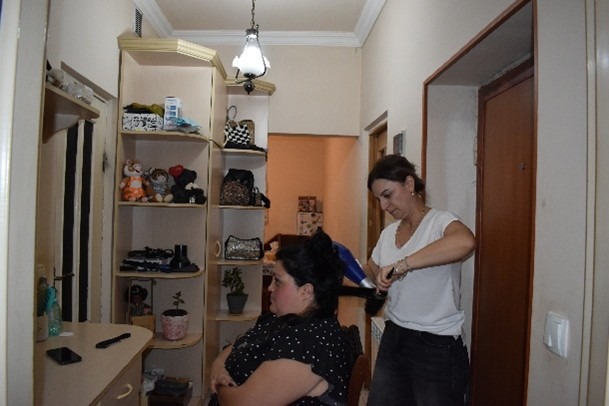
In Yerevan, Gayane is currently the family’s sole breadwinner, taking on any work she can sewing, accounting. Now, with the entire family burden on her shoulders, Gayane decided to deepen her professional skills. A friend who was previously a beneficiary of Armenian Caritas told her about the organization. Gayane decided to apply. Following a situational assessment and needs evaluation by the project staff, she was enrolled in the program.
She has already completed the training and upskilled. She now receives clients in this rented apartment-styling, combing, cutting, or coloring their hair. Once they acquire a new home, she will have her own dedicated room, and Caritas has promised to provide her with the necessary hairdressing tools and supplies in the near future.
Gayane now links her hopes and goals to her daughters: the eldest, Lusine, has married; the middle daughter, Anoush, has acquired a profession; and the youngest, 10-year-old Lena, attends school.
Her newly acquired profession will allow Gayane to stand strong beside her daughters, give them hope, and keep her mother-in-law’s spirits alive through them. At night-with tears in her eyes and memories in her heart; during the day-looking forward and reassuring her daughters.
Armenuhi Mkhoyan